
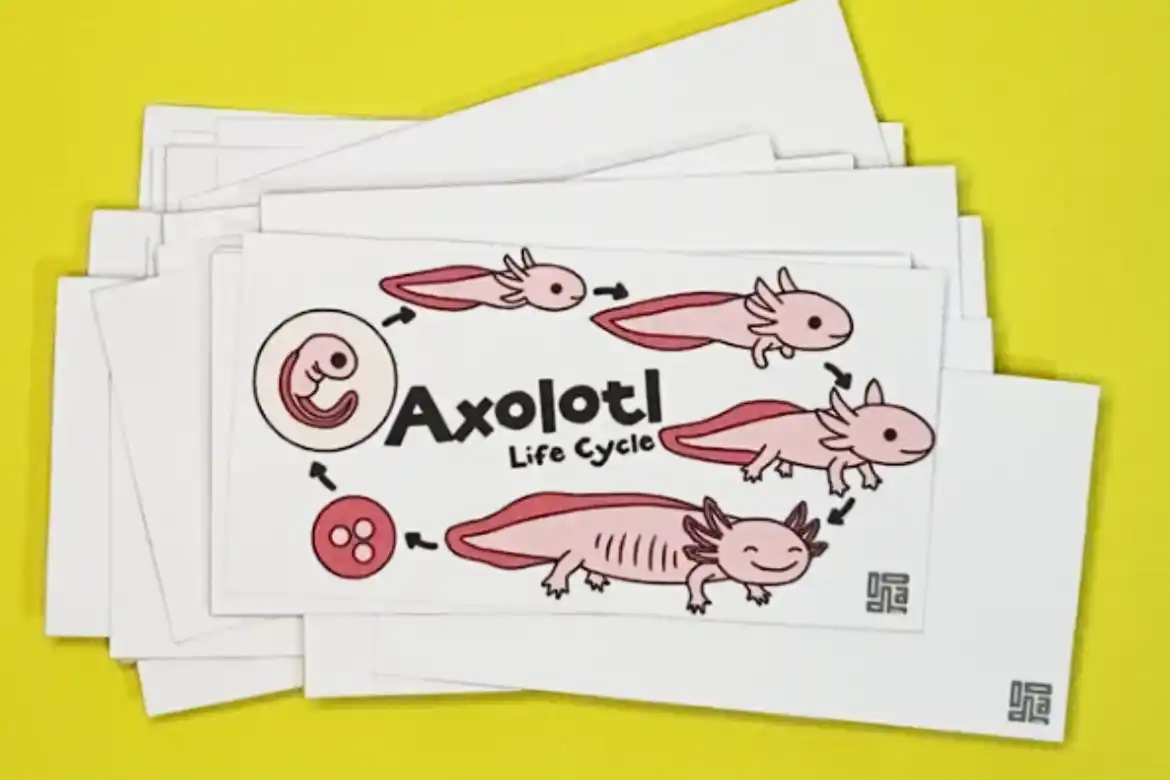
The axolotl is one of the most fascinating amphibians on Earth. Unlike frogs and most other amphibians, the axolotl never fully grows up. It keeps its tadpole like features, including those famous feathery gills for its entire life. This makes the axolotl life cycle completely unique in the animal kingdom.
If you’re a homeschool parent looking for an engaging science topic, the life cycle of an axolotl is a perfect choice. It captures attention, sparks curiosity, and opens the door to discussions about biology, conservation, and metamorphosis. In this guide, you’ll learn every stage of the amphibian life cycle and discover a hands-on activity to help your learners remember what they’ve learned.
What Is an Axolotl?
The axolotl (pronounced ACK-suh-lot-ul) is a type of salamander native to the lakes and canals of Mexico City. It is sometimes called the “Mexican walking fish,” but it’s not a fish at all, it’s an amphibian.
What makes the axolotl so special is a trait called neoteny. This means it reaches adulthood without undergoing complete metamorphosis. Most amphibians, like frogs, lose their tails and gills as they grow. Axolotls keep theirs forever. They stay in the water their whole lives and never move to land.
This unique trait makes learning about axolotls exciting for learners of all ages.
Stage 1: The Egg
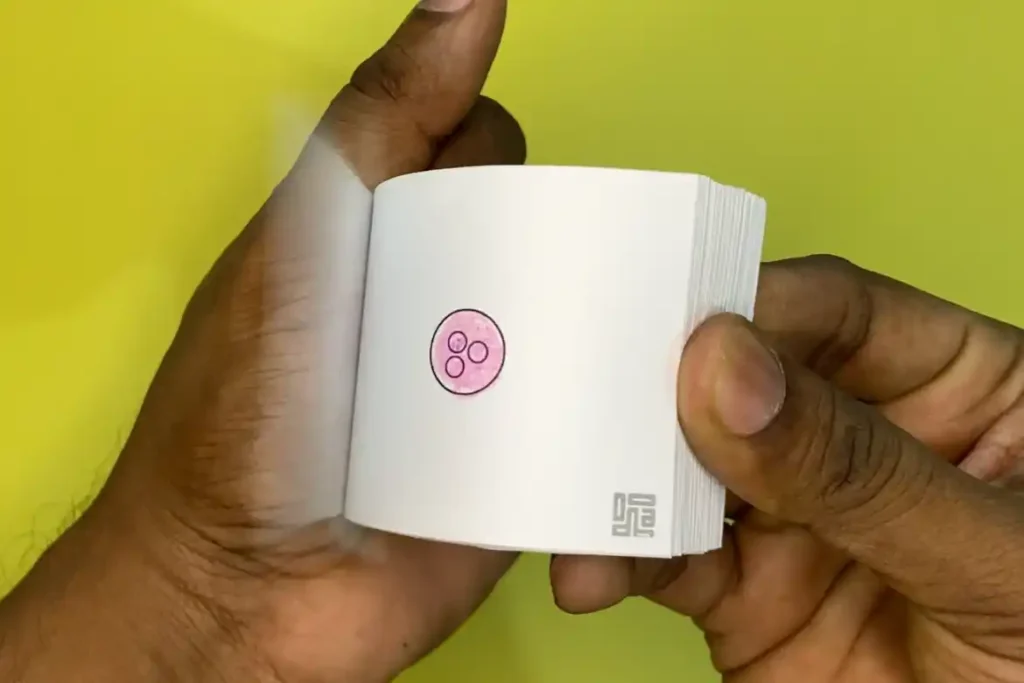
The life cycle of an axolotl begins with an egg.
A female axolotl can lay hundreds of eggs at once . Each egg is surrounded by a jelly-like coating that protects the growing embryo inside. The eggs are usually attached to plants or rocks in the water.
It takes about 2 to 3 weeks for the eggs to hatch, depending on the water temperature . Warmer water speeds up development, while cooler water slows it down.
Key Fact: Axolotl eggs are transparent, so you can actually see the baby axolotl developing inside.
Stage 2: Embryo
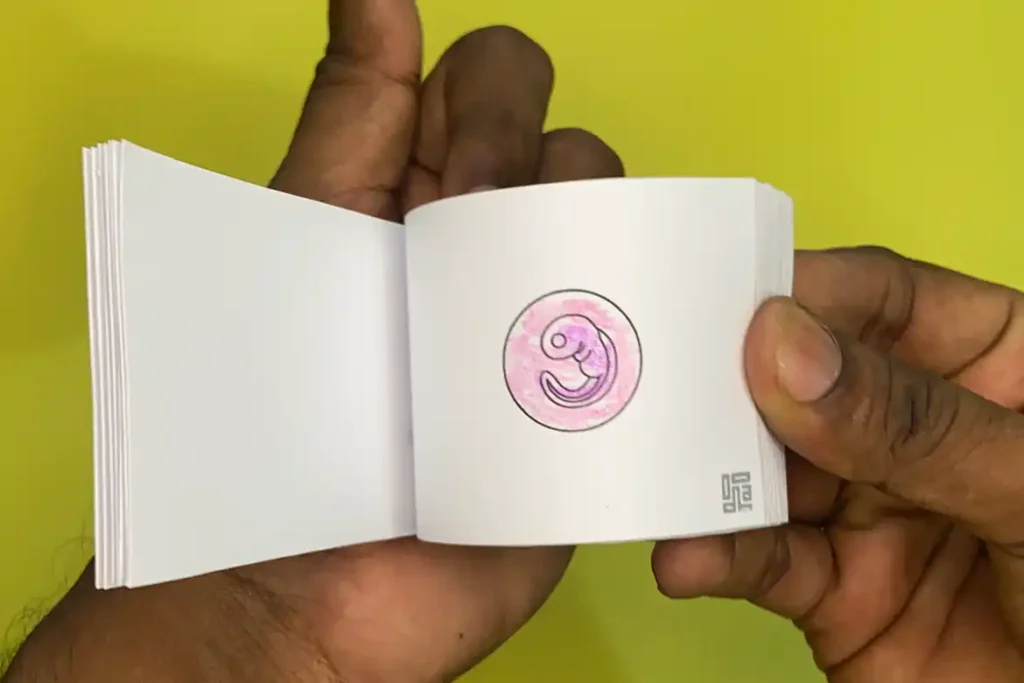
Before hatching, the axolotl develops as an embryo inside the egg.
Researchers have identified and described the stages of axolotl embryo development, from fertilization to hatching . The embryo goes through phases including cleavage, gastrulation, and organogenesis. This entire process takes about two weeks under normal conditions .
Key Fact: The axolotl embryo is a popular subject in scientific research because its large, robust embryos are easy to study .
Stage 3: Larva
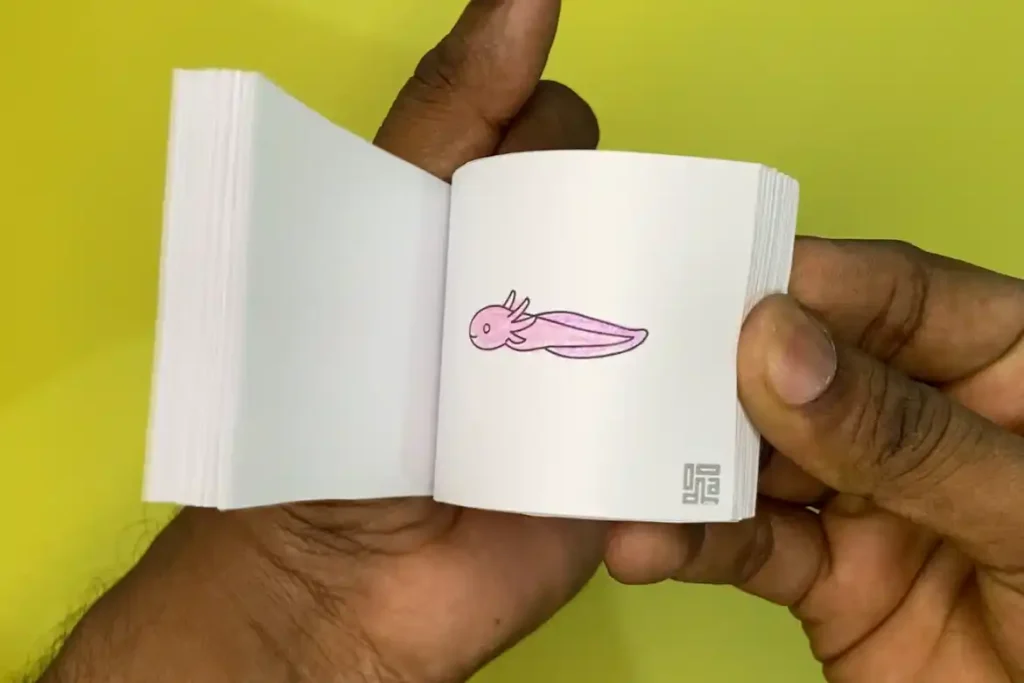
When axolotls hatch, they are called larvae .
Newly hatched larvae are very small around 15 to 16 millimeters long . They are transparent for the first few weeks of life, so you can see their internal organs . At this stage, they do not yet have limbs for walking. Instead, they have a broad fin that runs along their tail and back to help them swim .
Larvae feed on tiny organisms like water fleas and small insects. They grow quickly .
Key Fact: Axolotl larvae are carnivorous from birth. They eat small live food as soon as they hatch.
Stage 4: Larva with Two Legs
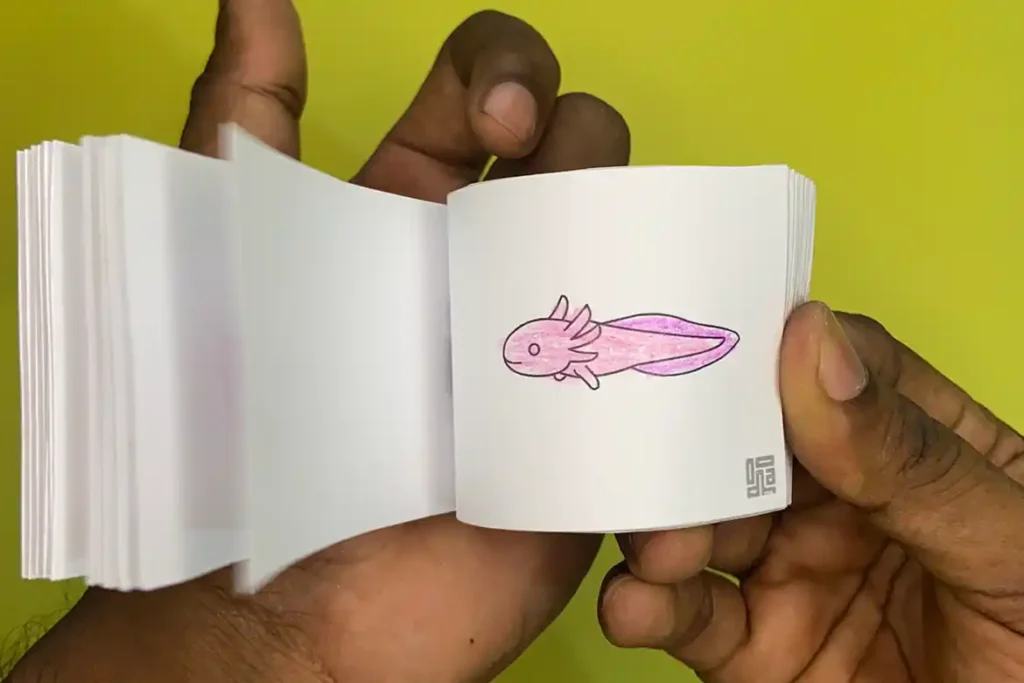
As the larvae grow, they begin to develop their front limbs first .
According to scientific studies, the forelimbs (front legs) appear about 10 days after hatching . They start as small buds that gradually grow into proper limbs with toes. At this stage, the axolotl is still fully aquatic and uses its gills to breathe.
Key Fact: Unlike frogs, axolotls develop their front legs before their back legs .
Stage 5: Larva with Four Legs
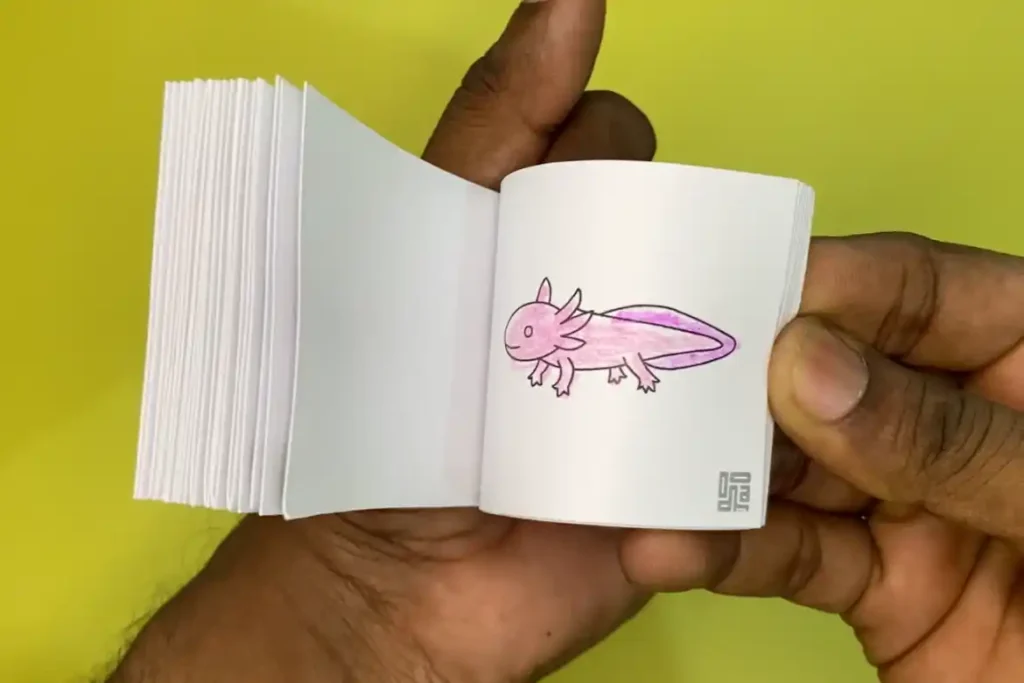
The next stage is when the hind limbs (back legs) develop.
Studies on axolotl limb development show that the hindlimbs begin to appear later than the forelimbs . The hindlimbs start as small bumps and gradually grow into complete legs with toes. Once all four limbs are fully developed, the axolotl looks like a miniature version of an adult.
Key Fact: By this stage, the axolotl has all four legs but still keeps its gills and tail fin features it will never lose.
Stage 6: Adult
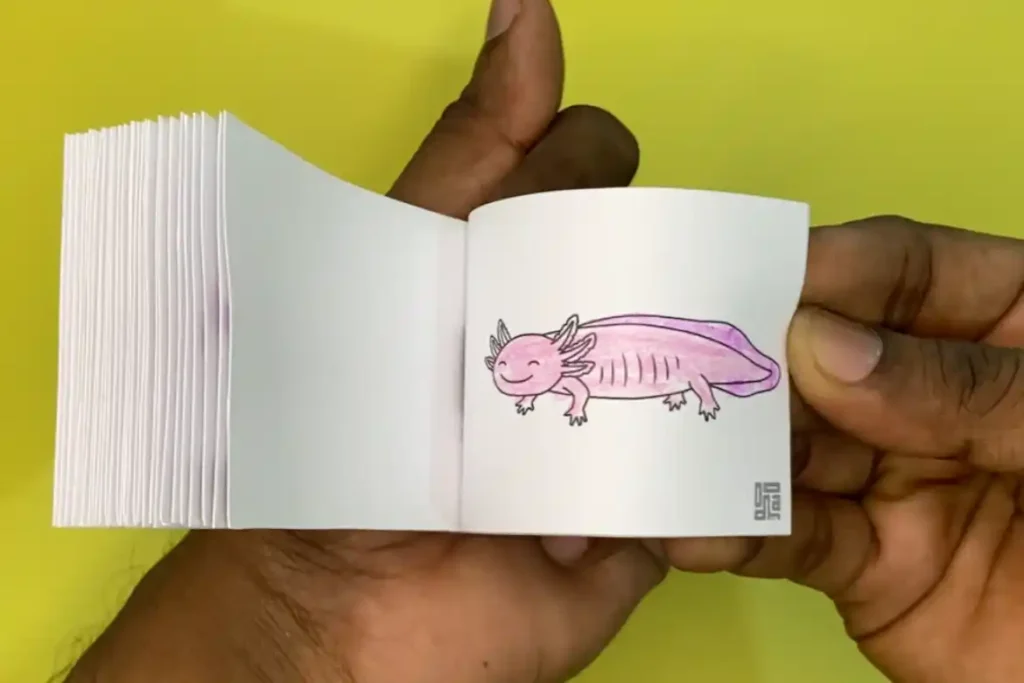
The final stage of the axolotl life cycle is adulthood.
Adult axolotls reach their full size by about 18 to 24 months . They can grow up to 12 inches long and live for 10 to 15 years in captivity .
Adults are fully aquatic and never leave the water. They keep their feathery gills, tail fin, and aquatic lifestyle their entire lives . They are carnivorous and eat a diet of worms, insects, and small fish .
Key Fact: Axolotls are critically endangered in the wild. Only 50 to 1,000 individuals are estimated to remain in their native habitat .
Why the Axolotl Life Cycle Is Unique
Unlike most amphibians, axolotls do not go through complete metamorphosis. This is called neoteny . They keep their larval features gills, tail fin, and aquatic lifestyle into adulthood.
This makes the axolotl life cycle different from the frog life cycle. Frogs change dramatically as they grow. Axolotls simply grow larger while keeping the same basic body shape.
For homeschool parents, this is a great opportunity to teach learners about animal life cycle diversity and how different species adapt to their environments.
Fun Axolotl Facts to Share with Your Learners
- Axolotls can regrow their limbs, tail, and even parts of their heart .
- They are native to Mexico and are critically endangered in the wild .
- They come in many colors, including pink, black, gold, and albino .
- They are studied by scientists for their amazing regenerative abilities .
- They are popular pets because of their cute appearance and easy care .
Hands-On Activity: Create Your Own Axolotl Life Cycle Flipbook
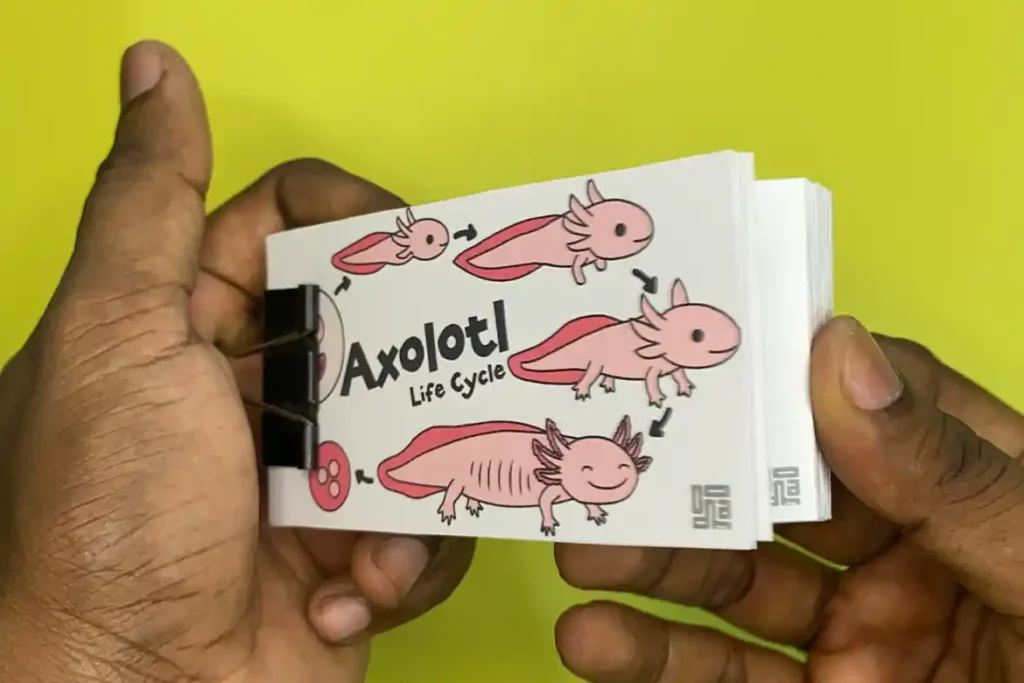
Reading about the axolotl life cycle is a great start. But hands-on learning helps it stick.
Our printable Axolotl Life Cycle Flipbook lets learners color, cut, assemble, and animate each stage of the amphibian life cycle. It’s a screen-free science activity that builds fine motor skills while teaching important biology concepts.
What’s Included:
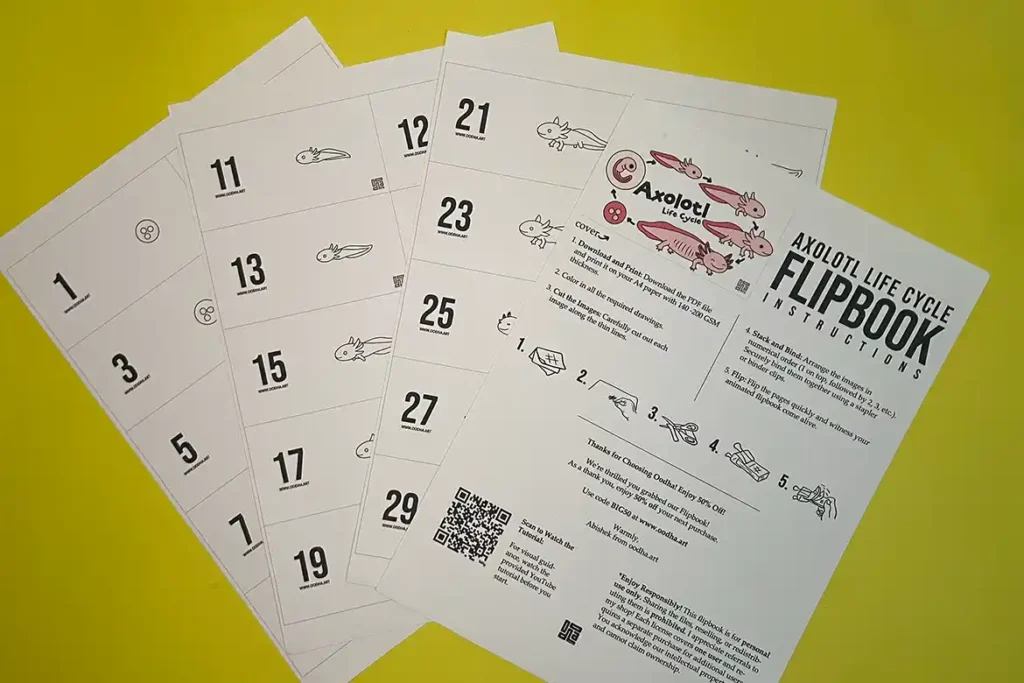
- Printable coloring pages for each life cycle stage: Egg, Embryo, Larva, Larva with Two Legs, Larva with Four Legs, and Adult
- Easy assembly instructions
Perfect For:
- Homeschool Learning Worksheets
- Classroom activity
- Montessori activity
- Hands on activity for preschoolers
- Science Crafts and STEM Crafts For Kids
Get Your Printable Flipbook Here:
https://oodha.art/product/axolotl-life-cycle-flipbook/
Conclusion
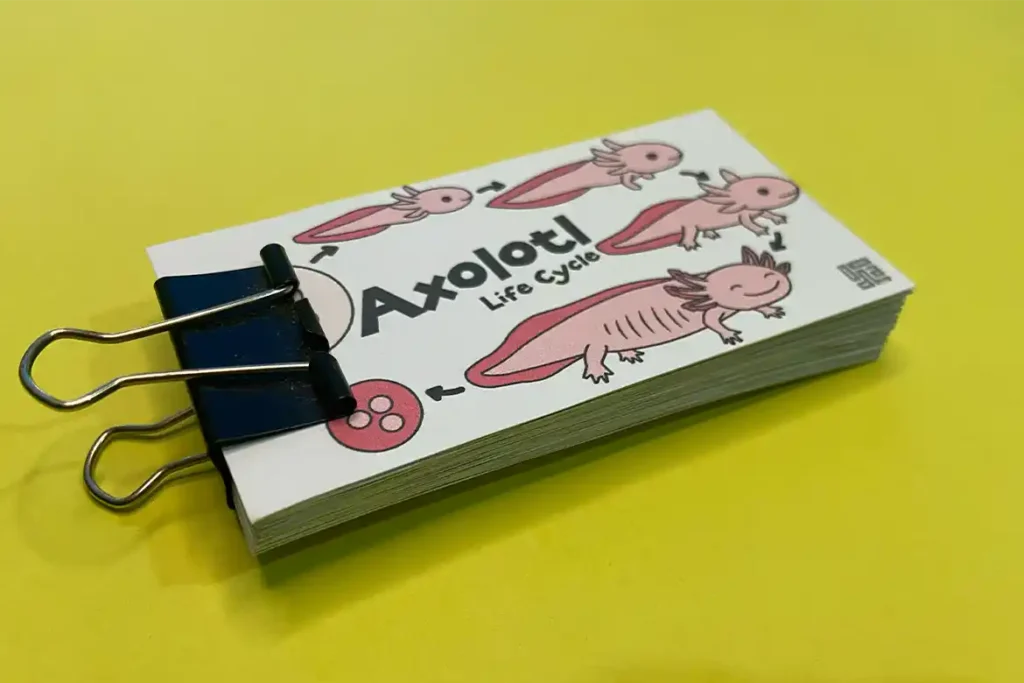
The axolotl life cycle is a wonderful way to teach learners about amphibian development and the diversity of life on Earth. From egg to embryo to larva to adult, each stage is fascinating and unique.
Pair your lesson with a hands-on flipbook activity for a memorable learning experience your learners will never forget.
Ready to start your axolotl study? Download the printable Axolotl Life Cycle Flipbook today and bring science to life!